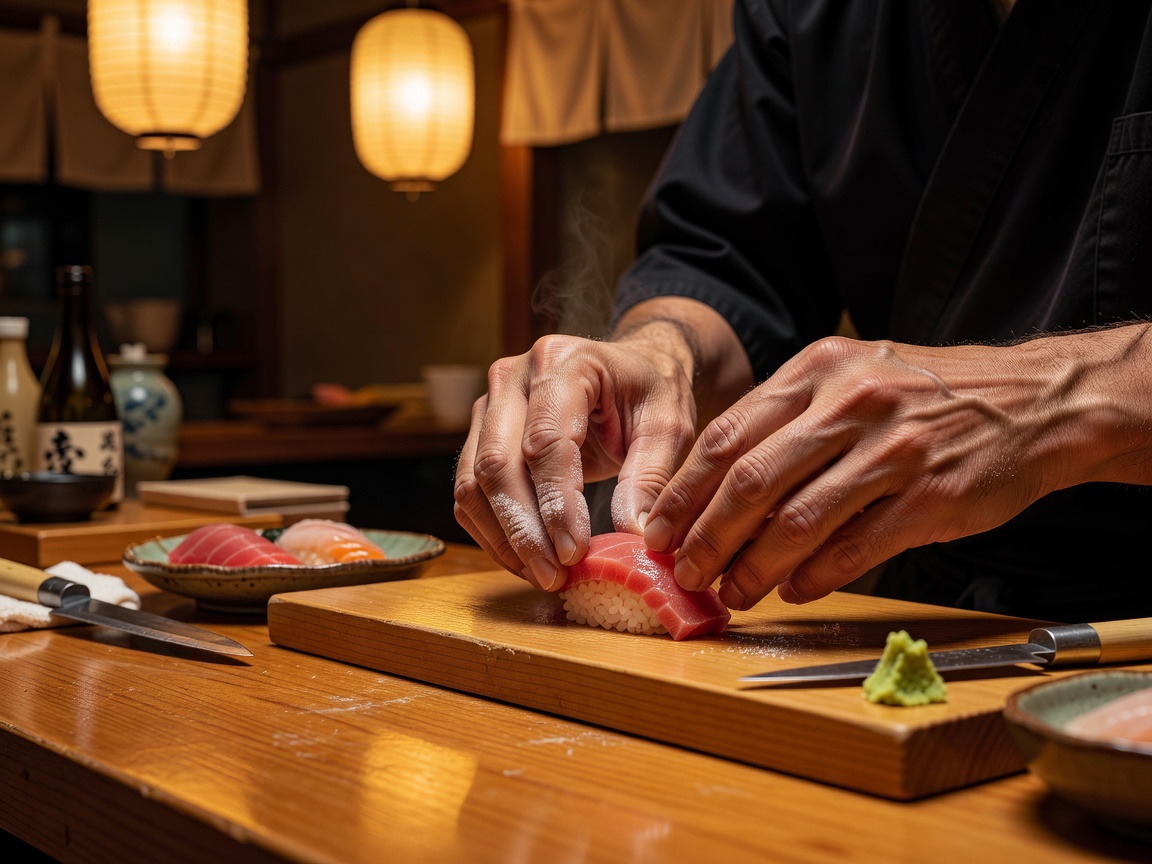
Omakase is commonly translated as “I leave it up to you.” In dining, it usually signals that the chef or restaurant selects much or all of the meal rather than asking guests to choose every dish. It is an expression of trust, but not a promise of one fixed format. A sushi counter, a seasonal Japanese tasting menu, and a set sequence created by a restaurant may all use the word differently.
How chef-led selection works
The chef considers the menu, ingredients available, preparation already under way, and the intended progression of the meal. The guest experiences those choices in sequence. At a counter, that relationship can feel direct: a dish may be served shortly after it is prepared, and a brief explanation can make its ingredients or seasoning easier to appreciate. Conversation is welcome where the restaurant invites it; quiet attention is equally appropriate.
Seasonality may influence the menu because availability, flavor, and texture change through the year. It does not mean every ingredient appears only in one season, or that every chef follows the same calendar. Sourcing, region, preservation, and restaurant style all matter. A menu can change during service or from one visit to another.
Omakase, set menu, or à la carte?
A set menu usually offers a predetermined collection of courses, with limited or no guest selection. An à la carte menu lets guests order individual dishes from a list. Omakase places more of the selection with the chef; some restaurants still offer choices, substitutions, or a defined set progression. The name alone does not tell you the course count, duration, price, or degree of flexibility.
| Format | Who chooses | Useful to know |
|---|---|---|
| Omakase | Primarily the chef, within the restaurant's format | Ask about restrictions, sequence, inclusions, and duration. |
| Set menu | Restaurant sets the courses | Check whether alternatives are available. |
| À la carte | Guest selects individual dishes | Offers choice, though availability can vary. |
What might be served?
A sushi-focused experience may include nigiri—topping served over seasoned rice—alongside other sushi forms. It might also include sashimi, sliced ingredients served without seasoned rice, or a cooked dish between sushi courses. Broader Japanese tasting menus can bring together small seasonal preparations, grilled or simmered food, soup, rice, and dessert. These are possibilities rather than a required order. Some meals are almost entirely sushi; others are not.
Course count, pacing, service style, and price differ from restaurant to restaurant. Check whether beverages, tax, service charges, or supplements are included, and read the official booking information for current terms. Do not infer the duration or inclusions from photographs or the word “omakase.”
Counter or table?
Counter seating can offer a close view of the chef’s work and make it easier to notice the rhythm of serving. It may also mean less personal space, a fixed pace, and fewer opportunities to pause between dishes. Table dining can suit guests who prefer conversation within their group, need more room, or want a less direct view of preparation. Neither is inherently better. The restaurant’s seating plan, access needs, and preferred atmosphere are reasonable factors in choosing.
Before you reserve
Ask whether the meal is sushi-focused or broader, what the advertised menu includes, how long to allow, and whether the restaurant can accommodate your dietary requirements. Communicate allergies clearly and well in advance; do not assume they can be handled safely once service begins. State whether a restriction is an allergy, intolerance, or preference. If a restaurant cannot accommodate it, choose another format rather than relying on an improvised substitution.
For a first visit, an introductory or shorter menu may be a comfortable way to understand the style. A longer progression may offer more variety but asks for more time and may have less flexibility. Compare the published format, pace, price information, seating, and cancellation terms—not just the number of dishes.
Good for
- Guests curious about chef-led selection and seasonal cooking.
- Sushi lovers who want to understand rice, toppings, and pacing.
- Visitors who are comfortable asking practical questions before booking.
What to know
- Omakase does not automatically mean sushi-only or a fixed course order.
- Disclose allergies and dietary needs before confirming a reservation.
- Use the restaurant’s own information for current price, inclusions, and policies.
On your first visit
Arrive at the requested time, follow the staff’s guidance on condiments, and ask questions when the moment feels appropriate. If you have a concern about an ingredient, raise it promptly rather than waiting until it is served. A thoughtful guest need not know every custom; clear communication and attention to the restaurant’s own guidance are more useful than memorizing a rigid rulebook.
For the next step, explore sushi traditions, tasting-menu structure, and our practical etiquette guide.