Forms you may encounter
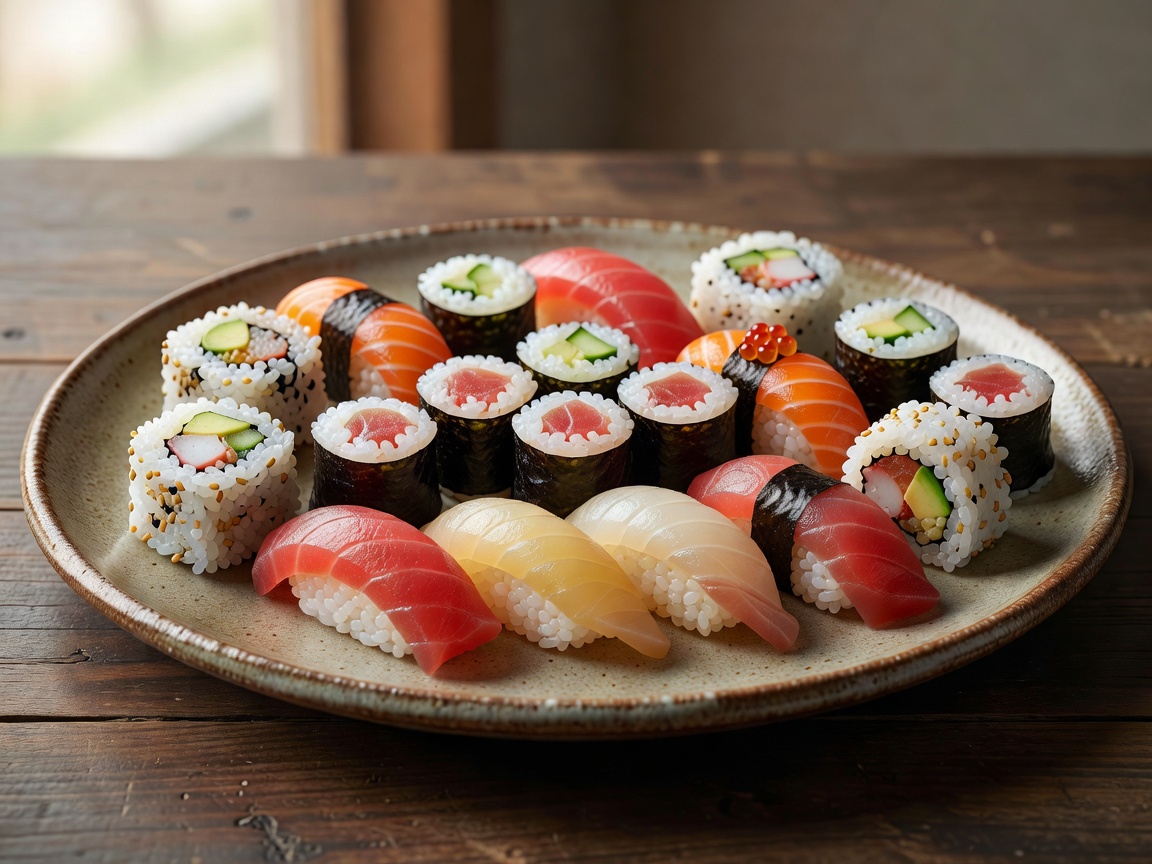
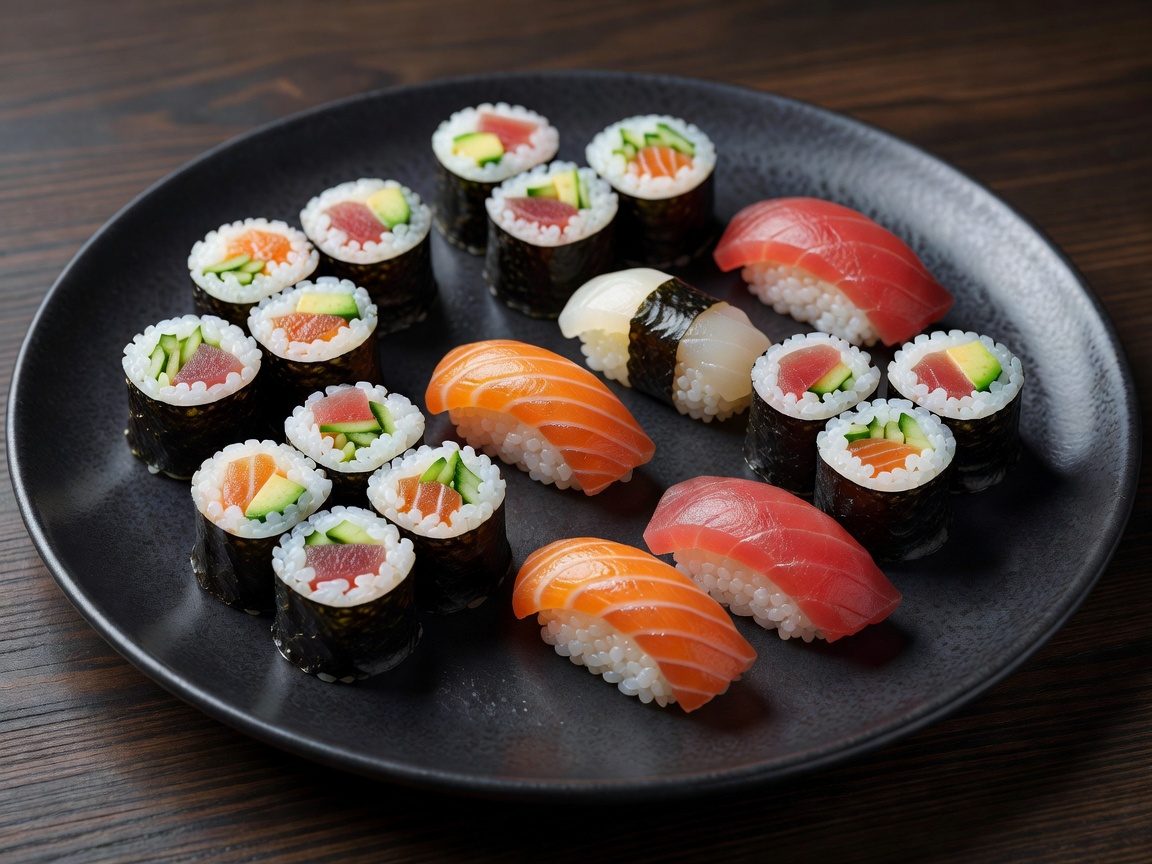
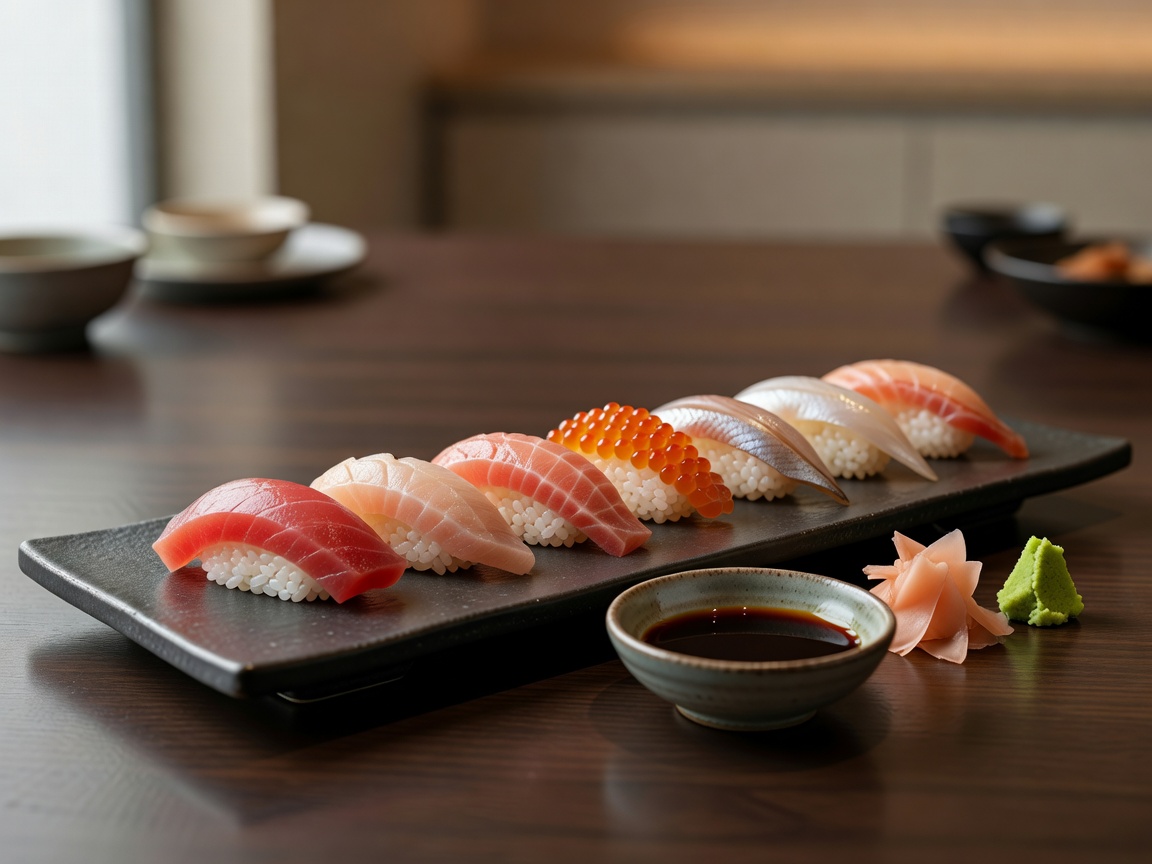
Nigiri is a hand-shaped portion of seasoned rice with a topping. Depending on the chef and ingredient, it may be served with a small amount of wasabi, a brushed seasoning, or another accompaniment. Maki means rolled sushi, commonly wrapped with seaweed called nori and cut into pieces. Temaki is a hand roll, often formed into a cone and intended to be eaten soon after serving so the seaweed retains texture. Chirashi means “scattered”; seasoned rice is presented with ingredients arranged over it, with styles varying by region and establishment.
Sushi can include cooked seafood, egg, tofu, vegetables, and preserved ingredients. A roll or rice bowl is not less legitimate because it differs from one chef’s counter style. Preparation depends on context, local preference, ingredients, and the restaurant’s approach.
Rice, knife work, and balance
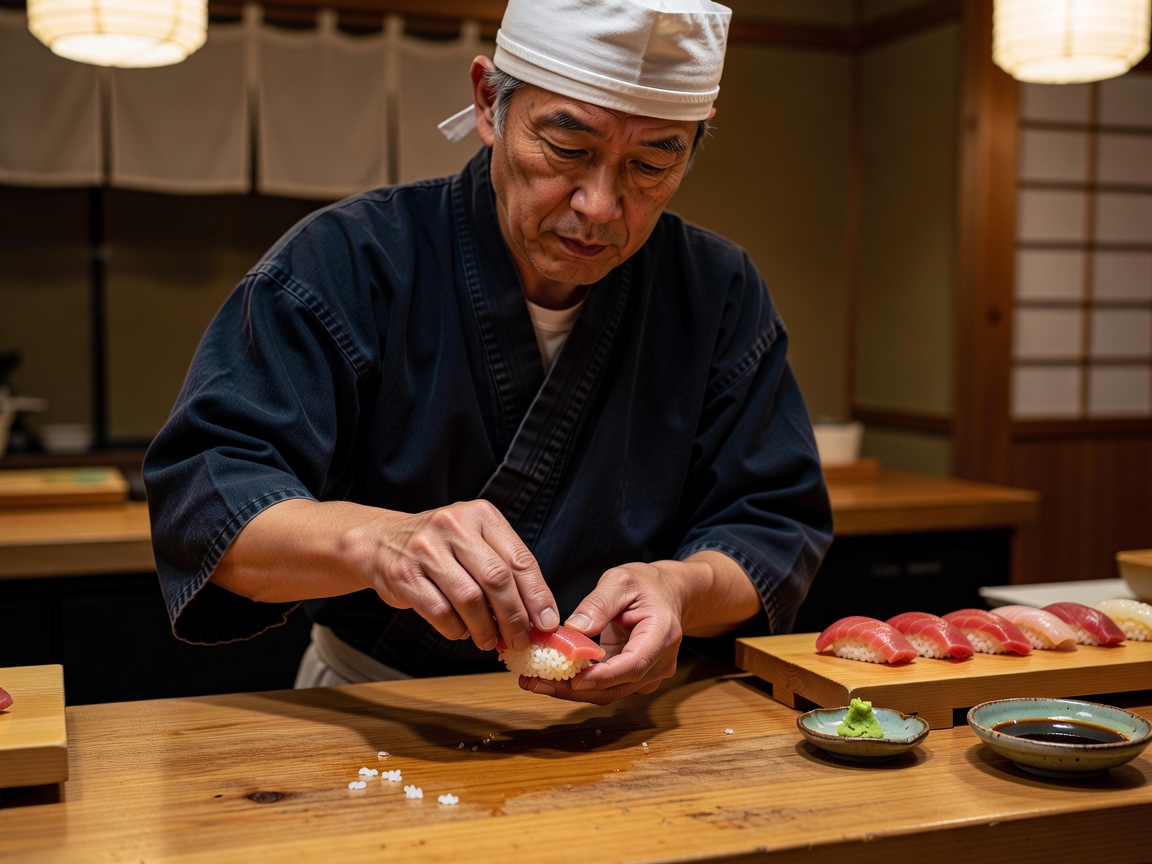
Rice preparation is central. Grain, washing, cooking, seasoning, moisture, and handling all affect the result. The rice should support the topping without overwhelming it. Knife work changes the way a topping sits on the rice and how it feels when eaten. Cut, thickness, grain direction, and a chef’s intended texture all contribute; there is no single visible technique that applies to every fish or style.
Ingredient temperature matters too. A topping and rice may be served at temperatures selected to suit the preparation. Temperature affects aroma and texture, so a piece can be best enjoyed soon after it arrives. Portion size and timing are similarly deliberate: the chef may shape a piece to be eaten in one or two bites, or serve it in a manner suited to that restaurant.
Wasabi, soy, and serving style
Wasabi is a pungent green condiment that may be placed between rice and topping, served separately, or offered in a form chosen by the restaurant. Soy sauce is a seasoning, not an automatic dip for every piece. Some sushi arrives already seasoned. If unsure, follow staff guidance or ask. When dipping is appropriate, a light touch can keep the rice from absorbing too much liquid; practices vary and should not become a source of anxiety.
Some counters serve pieces one at a time, while other settings present a platter or several courses together. A chef may describe a fish, seasoning, or preparation; explanations can be brief, and guests need not interrupt a busy moment. Sushi is not always served as a rigid progression, and dining customs differ between Japan and restaurants elsewhere.
Freshness and responsible handling
Raw seafood calls for appropriate professional sourcing, temperature control, and food-safety procedures. Appearance alone cannot establish safety. Home cooks without suitable training should rely on ingredients sold for the intended use and follow authoritative local food-safety guidance rather than attempting to assess or prepare raw fish from a photograph. Restaurants have their own procurement and handling systems; ask the restaurant directly about allergens and dietary concerns.
| Style | What it is | Commonly useful detail |
|---|---|---|
| Nigiri | Topping paired with seasoned rice | May be served individually and already seasoned. |
| Maki | Rolled sushi, often cut into pieces | Fillings and wrappers vary. |
| Temaki | Hand-formed roll, often cone-shaped | Texture is often best soon after serving. |
| Chirashi | Seasoned rice with ingredients arranged above | Presentation and ingredients differ by style. |
Good for
- Guests learning the difference between sushi and sashimi.
- Anyone curious about how rice, texture, and temperature work together.
- Visitors exploring both fish and non-fish sushi.
What to know
- Not all sushi contains raw fish; not all sushi styles use the same preparation.
- Ask before adding soy sauce if a piece appears already seasoned.
- Allergy and food-safety questions should go directly to the restaurant.
Continue with our guides to seasonal ingredients, omakase dining, and counter etiquette.